
Table Of Content
Introduction
The global agrochemical market is poised for a transformative decade. In 2025, the market reached a valuation of USD 251 billion, and it’s projected to grow steadily to USD 297 billion by 2030, driven by a 3.39% CAGR. This growth is fueled by consistent fertilizer demand in grain-heavy economies, rapid adoption of biological crop-protection products, and increasing reliance on precision agriculture tools that improve input efficiency.
As a trusted packaging partner since 1984, we at Marudhara Polypack specialize in delivering end-to-end solutions from primary packaging like laminated pouches, to secondary options such as BOPP woven sacks and flexo-printed bags, and even tertiary bulk options. Our materials are built to resist chemical reactions, preserve shelf life, and ensure safe transportation across geographies.
Today’s agrochemical packaging demands a fine balance, barrier properties, leak-proof designs, UV stability, and regulatory certifications all play a critical role. Whether it’s a laminated pouch for liquid pesticides, a flexo-printed woven sack for granular fertilizers, or a UN-certified bulk bag for international shipment, the right packaging safeguards both the product and your reputation.
What is Flexible Packaging?
Flexible packaging uses bendable materials like paper, plastic, or foil to create bags, pouches, and wraps. It’s lightweight, customizable, and cost-efficient—ideal for food, pharma, and personal care sectors. Known for saving space and resources, it adapts easily to product shapes, making it a smart choice for modern packaging needs.
Unlike rigid containers, flexible packaging offers ease of use, lightweight structure, and cost-effective storage and transportation. For agrochemical companies, it offers unmatched versatility, whether you’re packaging liquids, powders, or granules.
Key Challenges in Agrochemical Packaging
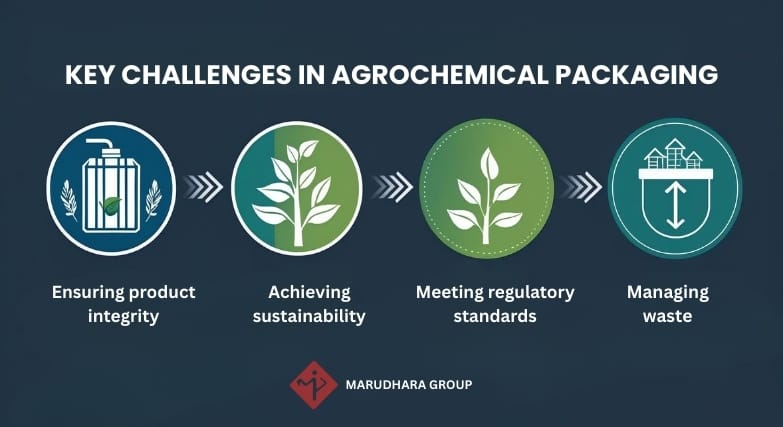
Agrochemicals are often hazardous, reactive, and highly regulated. Packaging them involves several challenges:
- Ensuring product integrity: The packaging must keep the chemical safe, effective, and leak-proof during storage and transport.
- Achieving sustainability: Using eco-friendly materials that reduce harm to the environment is important but can be difficult.
- Meeting regulatory standards: Agrochemical packaging must follow strict government rules to ensure safety and compliance.
- Managing waste: Dealing with leftover packaging and reducing pollution is a big challenge for manufacturers and users.
One major concern is chemical resistance. The packaging must not interact with the contents or degrade upon contact. Equally important are barrier properties, which shield the contents from external moisture, UV rays, and air exposure.
Agrochemicals also require leak-proof designs to avoid spills that could harm handlers or the environment. Regulatory compliance adds another layer of complexity—many products need UN-certified packaging for transport.
Finally, sustainability is emerging as a significant challenge. The industry must balance durability with environmental responsibility, especially as global regulations tighten and consumers demand greener alternatives.
How Flexible Packaging Solves These Challenges
Flexible packaging rises to meet these demands through a combination of innovation and adaptability.
Its superior barrier properties ensure that agrochemicals stay potent and safe throughout their shelf life. Multi-layer laminated films prevent moisture, air, and UV rays from compromising the contents. This is especially useful for sensitive products like biological pesticides.
Customization is another key advantage. Flexible packaging can be designed in various formats—spouted pouches for liquids, zip-lock pouches for powders, or heavy-duty sacks for bulk materials. Each design can be tailored for ease of use, safe dispensing, and regulatory labeling.
When it comes to cost, flexible packaging stands out. It is lightweight, reducing shipping costs and making storage more efficient. The durability and chemical resistance of materials like BOPP and HDPE ensure minimal leakage and maximum safety.
Printing technology like flexographic printing enables high-quality, branded packaging with essential compliance details and usage instructions. Plus, modern anti-counterfeit features such as holograms or QR codes can be integrated.
And with rising environmental concerns, options like eco-friendly laminates and compostable films allow brands to embrace sustainability without compromising performance.
Popular Flexible Packaging Types for Agrochemicals
Several flexible packaging formats have become standard across the agrochemical sector:
- BOPP Woven Sacks: Ideal for bulk fertilizers and granulated pesticides. These sacks are tear-resistant, printable, and compatible with valve or open-mouth closures.
- Laminated Pouches: Perfect for liquid formulations or powder concentrates. Their multi-layer structure ensures high barrier protection.
- Flexo-Printed Bags: These bags combine visual appeal with durability. They allow detailed branding and safety instructions to be clearly displayed.
- Spout Pouches and 3-side Seal Bags: These options make dispensing and resealing liquids safe and convenient.
Why Agrochemical Companies Are Switching to Flexible Packaging
Manufacturers are under pressure to meet regulatory standards while maintaining product integrity and user convenience. Flexible packaging delivers on all fronts: it’s compliant, safe, efficient, and cost-effective.
Moreover, the rise of digital farming and traceable supply chains makes packaging a key branding tool. Flexographic printing and QR code integration enable full product traceability and authenticity, building trust in competitive markets.
As companies focus on sustainability, recyclable and low-waste materials in flexible formats gain preference. With flexible packaging, brands can align with environmental goals while optimizing logistics and performance.
How Marudhara Polypack Supports the Agrochemical Industry
With nearly four decades of expertise, Marudhara Polypack is a name trusted across the agrochemical sector. We offer custom-engineered solutions for every stage of packaging—from primary barrier laminates to secondary BOPP sacks and tertiary FIBC containers.
Our packaging solutions are rigorously tested for chemical resistance, UV stability, and leak-proof performance. We comply with international safety norms and specialize in tamper-evident, UN-certified, and child-resistant packaging formats.
Whether you’re launching a new pesticide line or scaling your fertilizer exports, our advanced form-fill-seal compatible bags, valve sacks, and print-registered flexo bags ensure your brand stands out while your product stays protected.
Conclusion
Flexible packaging plays a vital role in modern agrochemical logistics. It’s not just about containing the product; it’s about ensuring safety, compliance, and efficiency across the supply chain.
In a sector driven by sustainability, regulation, and innovation, flexible packaging is the bridge that connects high-performance agrochemicals with responsible distribution.
Looking for reliable, durable, and regulation-ready packaging for your agrochemical brand? Reach out to Marudhara Polypack Pvt Ltd to get custom solutions that align with your business goals and industry demands.
📞 Reach out at +91 98112 29241 or email marketing@mppi.co.in